Core Web Vitals signals
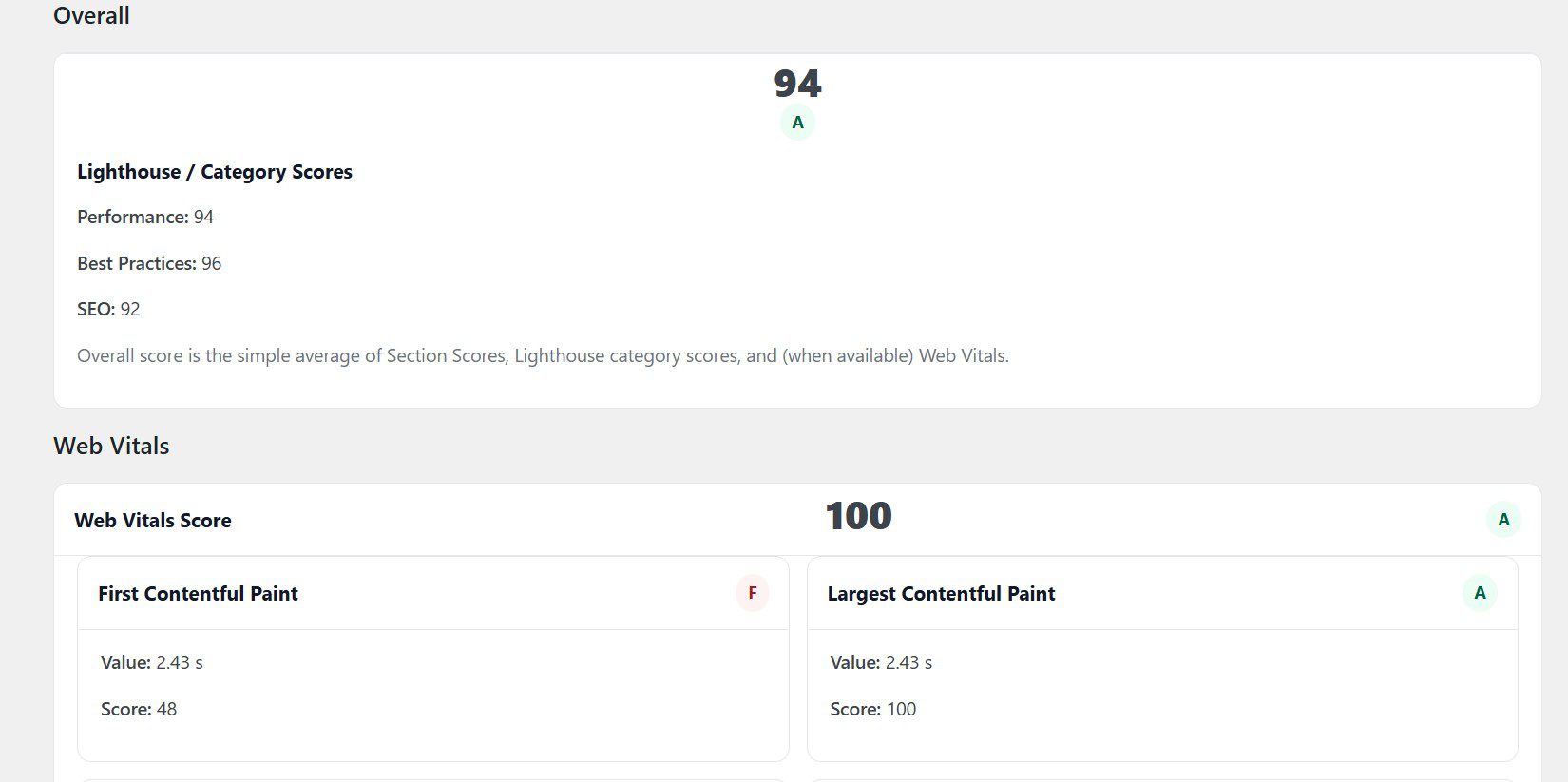
Highlights LCP / CLS risk patterns and common causes like render delay, heavy layouts, and slow hero rendering.
- Largest element + likely cause
- Render delay vs load time hints
- Layout shift risk indicators
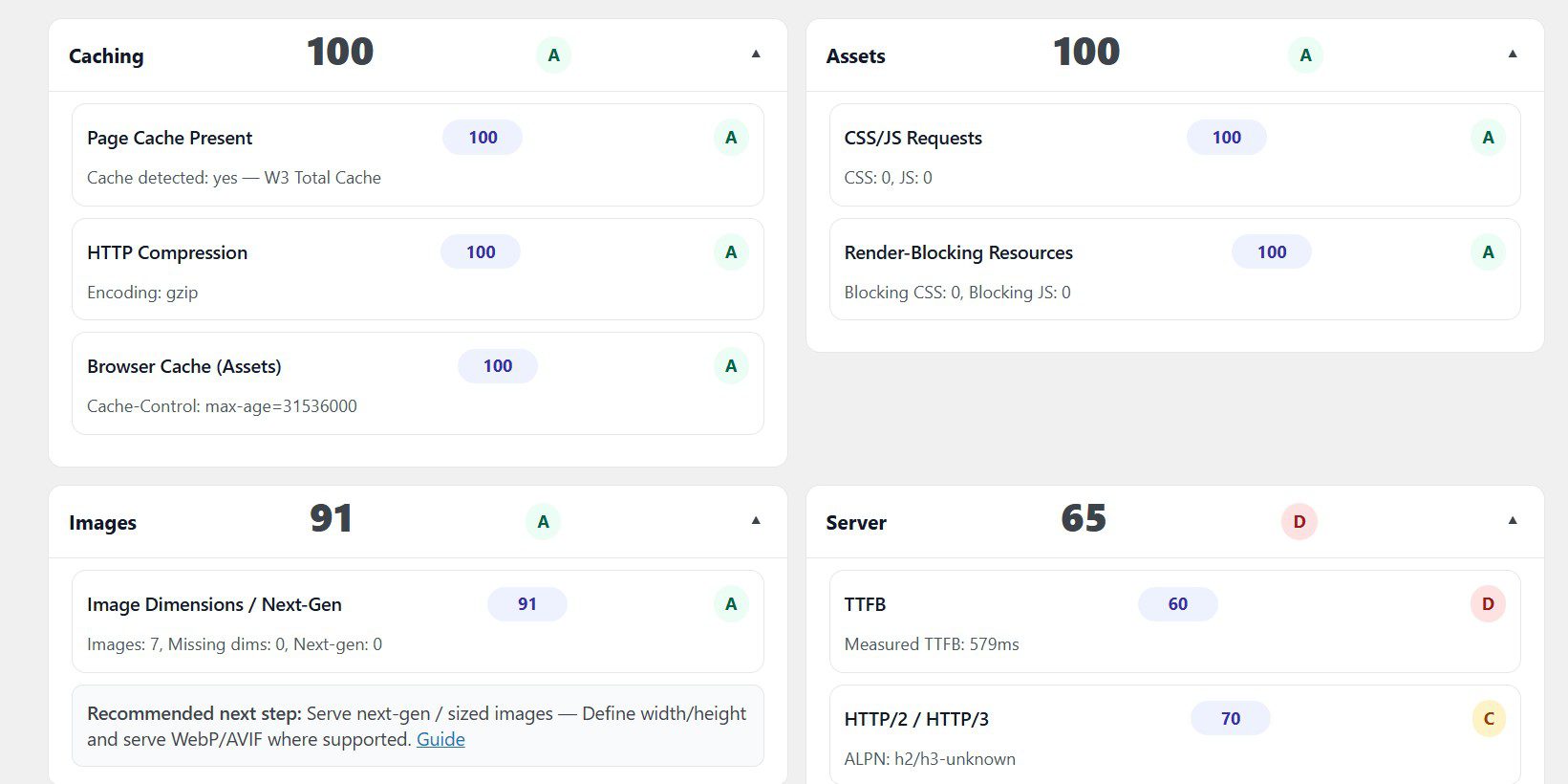
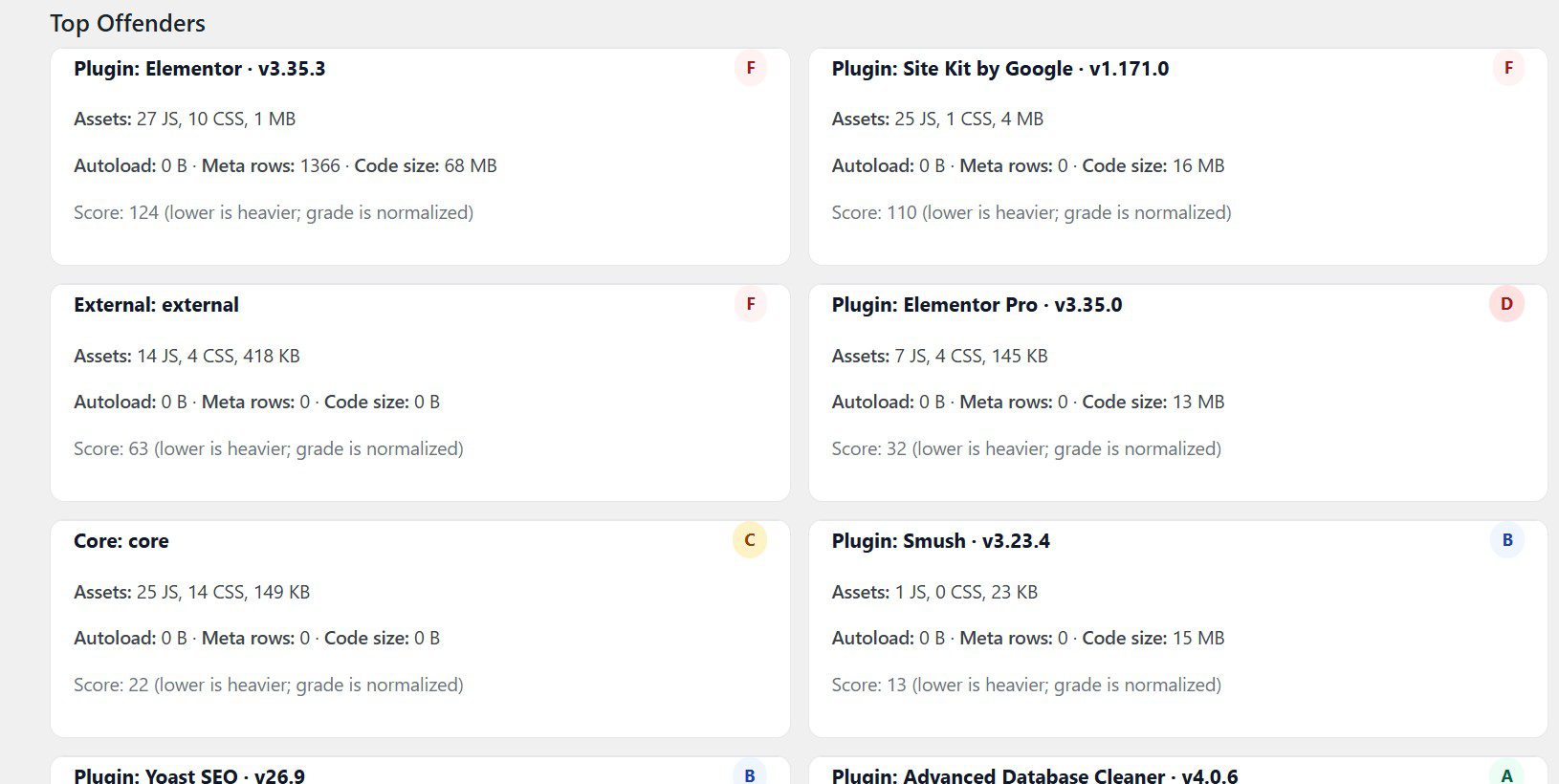
The Nfinite WordPress Audit Plugin generates a fast, lightweight scorecard that highlights Core Web Vitals signals, PageSpeed data, caching signals, and common bottlenecks.
Use this as step one before spending money on fixes, hosting, or a rebuild. You’ll know what to investigate next — and whether a deeper, human-led diagnostic is worth it.
Submit your site and generate a fast, tool-driven baseline of speed, Core Web Vitals, and common performance blockers. No credit card. No sales call.
If the snapshot flags deeper issues, you’ll have the option to request a paid diagnostic review where we interpret the results and map out the best next steps.
This is not a “100 warnings” scanner. It’s a focused snapshot designed to surface the most common bottlenecks that make WordPress feel slow, fragile, or expensive to maintain.
Highlights LCP / CLS risk patterns and common causes like render delay, heavy layouts, and slow hero rendering.
Pulls PageSpeed-style performance signals and organizes them into a readable scorecard.
Detects whether basic performance foundations are in place (and flags common misconfigurations).
Quick, transparent, and no credentials required. This is a data point — not a sales call.
Upload the Nfinite Audit Plugin, activate it, and open the audit screen in your WordPress dashboard.
Click run. The plugin generates a lightweight report and flags the most common bottlenecks.
Decide if you can DIY improvements, or if you need a deeper performance diagnostic and fixes.
Keep it simple. This plugin is step one — your “should I care?” filter.
Yes. It’s designed to give you an objective baseline without a sales call or upfront commitment.
No. The snapshot runs inside your WordPress dashboard. You control what’s installed and what’s run.
The snapshot is lightweight and intended to be run on demand. You can run it, review the scorecard, and you’re done.
That’s the point. The report helps you prioritize. Some fixes are DIY; others need deeper performance work or hosting changes.